Category: extraterrestrials

Explore the scientific search for life beyond Earth. From the mathematical probabilities of the Drake Equation to the study of exoplanets in habitable zones, we investigate the signatures of biological and technological intelligence in the cosmos. This category bridges the gap between astrobiology and the profound philosophical questions of our place in the universe.

  • Beyond the Filter: A Comprehensive Analysis of Grabby Aliens, Aestivation, and High-Dimensional Civilizational Models

    A Comprehensive Analysis of Exotic Resolutions to the Fermi Paradox
    Beyond The Great filter.

    The Fermi Paradox remains one of the most enduring and unsettling queries in modern astrophysics. Formulated informally by Enrico Fermi in 1950 and rigorously categorized by researchers like Carl Sagan and Frank Drake, the paradox highlights the stark contradiction between the high statistical probability of extraterrestrial intelligence (ETI) and the complete absence of observational evidence. With an estimated 200–400 billion stars in the Milky Way alone, and potentially 70 sextillion in the observable universe, the Copernican Principle suggests that Earth should not be unique. Yet, after decades of radio astronomy and the search for extraterrestrial intelligence (SETI), the cosmos remains eerily silent.

    Historically, attempts to resolve this have centered on the “Great Filter”—a hypothetical probability barrier that prevents life from becoming an expanding, space-faring civilization. This filter could lie in our past (making life rare) or in our future (implying civilizations inevitably destroy themselves). However, a new class of “Beyond the Filter” models has emerged that do not rely on the rarity of life, but rather on selection effects, thermodynamic strategies, or dimensional limitations.

    The Grabby Aliens Model: Why We are “Early”

    Image by Daniela Realpe from Pixabay

    The “Grabby Aliens” model, developed by economist Robin Hanson and his colleagues, addresses a fundamental riddle: Why has humanity appeared so early in the universe’s history?

    The Riddle of Earliness

    Standard cosmological models suggest the universe will remain habitable for trillions of years. Red dwarf stars have stable lifetimes extending up to 10 trillion years. If life relies on a sequence of “hard steps” (improbable evolutionary transitions), the mathematical expectation is that the vast majority of civilizations should arise in the distant future. Specifically, if there are roughly six hard steps to reach our level of intelligence, over 99% of advanced life should appear after the present day.

    Hanson proposes that “Grabby Aliens” provide the truncation to this timeline. Late-arriving civilizations never evolve because the universe is pre-emptively colonized by the “early risers.”

    Model Parameters

    The model distinguishes between “Quiet” civilizations (which do not expand and cannot explain our earliness) and “Loud” (Grabby) civilizations. Grabby civilizations expand rapidly, visibly change the volumes they control, and last a long time.

    Parameter Symbol Description Estimation Basis
    Expansion Speed \(s\) Radial velocity of the civilization’s influence. Estimated at 0.5c to 0.8c; if it were lower, we would see older neighbors.
    Power Law \(n\) Number of “hard steps” in evolution. Derived from Earth’s major evolutionary events.
    Origin Constant \(k\) Calibration of appearance rate. Assumes humanity’s current date is a random sample of pre-grabby dates.

    The “Deadline”

    A counter-intuitive result is that Grabby Aliens likely control 40% to 50% of the universe’s volume right now. We see an empty sky because these civilizations are at vast distances; their expansion fronts move at near-light speeds, but the light from their “grabby” phase has not yet reached Earth. We are effectively looking at their galaxies as they were in the distant past. This suggests humanity exists in a rapidly shrinking “bubble” of uncolonized space and will encounter a Grabby civilization in 200 million to 2 billion years.

    The Aestivation Hypothesis: Thermodynamics as Destiny

    While Grabby Aliens maximize spatial volume, the Aestivation Hypothesis assumes they maximize computation. Proposed by researchers at the Future of Humanity Institute, it suggests aliens are not dead—they are simply hibernating.

    The Logic of Information Processing

    Advanced civilizations likely transition to digital substrates. For a digital civilization, the ultimate resource is computational capacity, which is limited by thermodynamics. Landauer’s Principle defines the minimum heat energy E released when erasing a bit of information:

    \(E \ge k_B T \ln(2)\)

    The energy cost is directly proportional to the temperature (T) of the environment. Computing in a cold environment is vastly more efficient than in a hot one.

    The Cosmic “Discount Rate”

    The universe is currently “hot” due to the Cosmic Microwave Background (CMB) at 2.7 Kelvin. By waiting for the universe to expand and cool, a civilization could increase its total computational potential by a factor of 10^{30}. This “Rational Aestivation” suggests they are “sleeping” through the warm era to wake up in a future where their energy produces more “happiness” or “knowledge.”

    The Early Waker Problem

    To a sleeper, expanding humanity is a pest burning down the “library” (stars) to stay warm. This implies aestivating civilizations should leave behind “Berserker probes” to suppress new civilizations before they consume the resource stock. The fact that we have not been destroyed suggests we are either not yet a threat or the hypothesis is false.

    The Bulk Beings Hypothesis: Orthogonal Existence
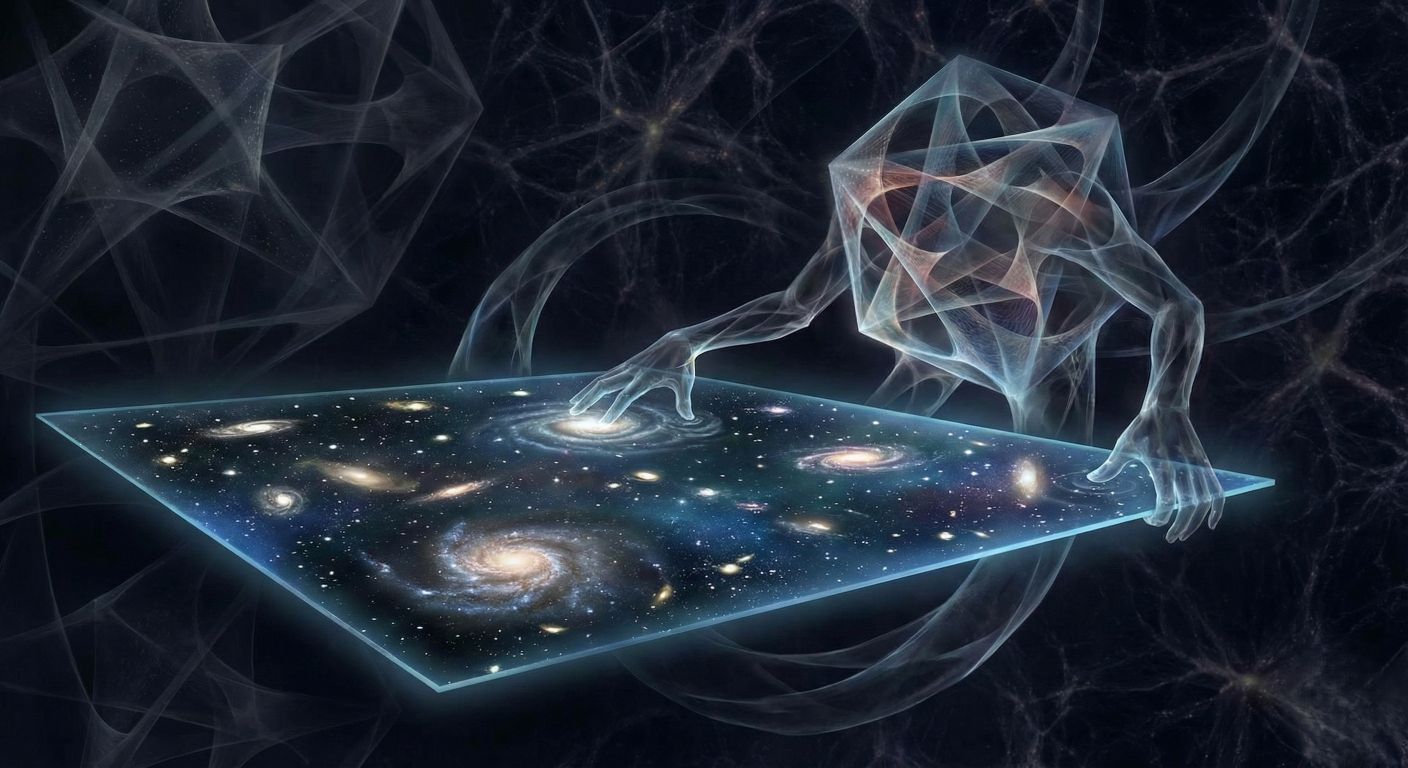
    The Bulk Beings Hypothesis

    The third model questions the very space we are searching. It posits that advanced life exists in higher dimensions (the “Bulk”) or is composed of Dark Matter.

    Theoretical Context: String Theory
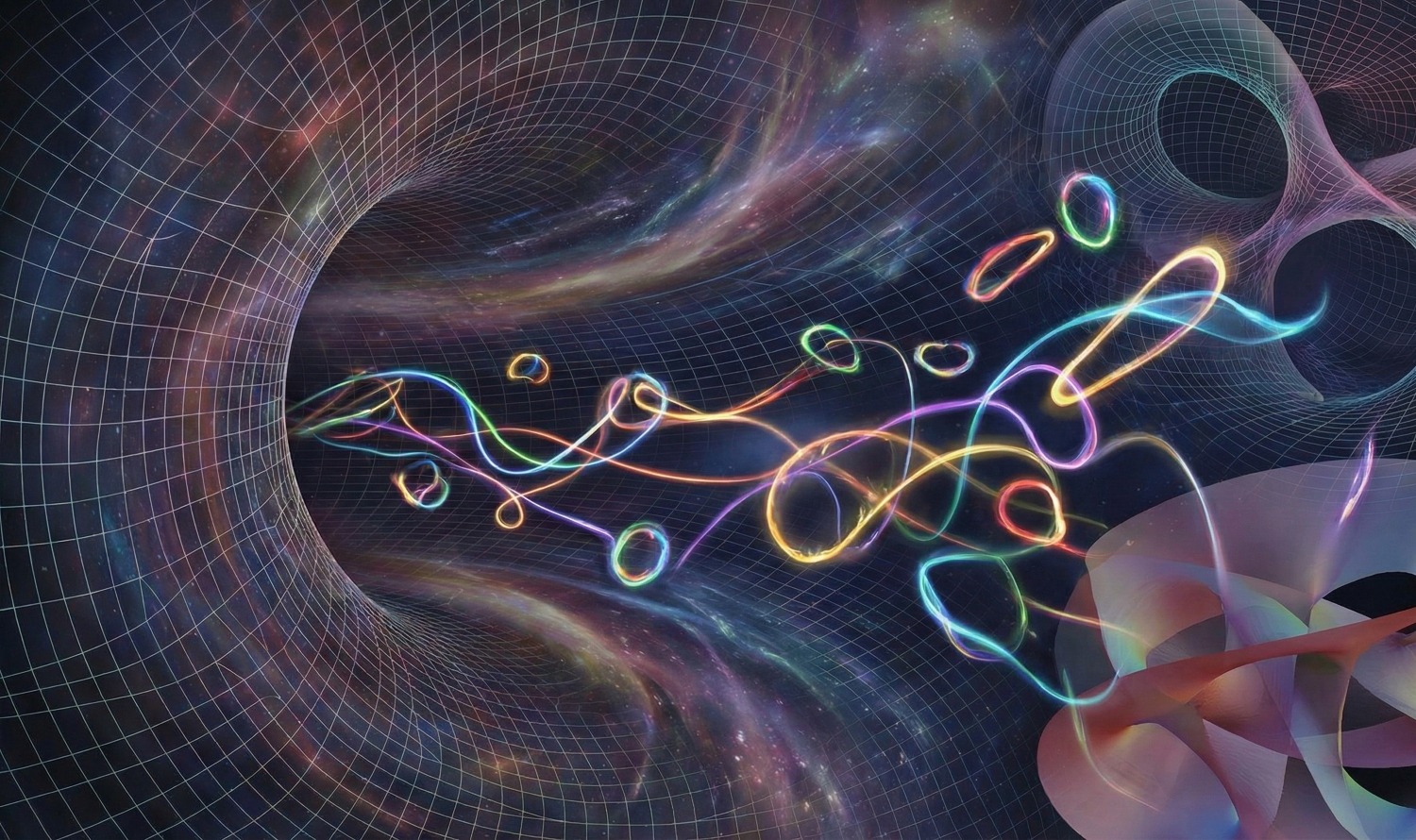
    String and M-Theory require 10 or 11 dimensions to unify gravity with quantum mechanics. In these models, our universe is a 3D “brane” floating in a higher-dimensional Bulk.

    • The Confinement of Light: Photons (light/radio) are “open strings” stuck to our brane; they cannot travel into the Bulk, making anything there invisible to our telescopes.
    • The Leakage of Gravity: Gravity is composed of “closed strings” that propagate freely into the Bulk, which may explain why it is so much weaker than other forces.

    Life in the Bulk and the Shadow Biosphere

    A being in the Bulk would view our 3D universe like a 2D sheet of paper. Advanced civilizations might transcend “upward” into this larger reality rather than expanding across our 3D galaxy.

    A related idea involves Dark Matter, which makes up 85% of the matter in the universe but only interacts via gravity. Physicists Lisa Randall and Caleb Scharf suggest dark matter might have its own “Dark Electromagnetism” or “Dark Chemistry,” leading to a “Shadow Biosphere” of dark organisms co-habiting the Milky Way, completely invisible to us. Advanced alien engineering might even appear to us as laws of physics—for instance, “Dark Energy” could be waste heat from a hyper-advanced intelligence.

    Synthesis: The Future of the Paradox

    Feature Grabby Aliens Aestivation Bulk Beings / Higher Dimensions
    Explanation for Silence We are early; the expansion wave hasn’t hit us yet. They are dormant to save energy; we are effectively “pests.” They exist in dimensions or substrates (Dark Matter) we cannot perceive.
    Primary Motivation Expansion: Maximizing spatial control. Efficiency: Maximizing computation/happiness per joule. Transcendence: Utilizing full physical reality.
    Observational Prediction Long Arcs in CMB/Galaxy maps. Cold spots or missing stars (Dyson spheres). Anomalous gravity or variation in constants.
    Existential Risk High: Contact implies assimilation or extinction. Moderate: Automated “pest control” systems. Unknown: We may be too primitive to interact.

    The Conflict of Strategies

    These models are not always compatible. A single Grabby civilization destabilizes Aestivation by consuming the resources the sleepers are saving. Alternatively, Grabby behavior might be a “larval stage”—a species expands territorially until it discovers how to access the Bulk, at which point it disappears from our 3D view.

    Conclusion

    The Grabby Aliens hypothesis is perhaps the most robust, relying on the fewest assumptions about alien psychology. It suggests the silence of the sky is not an indication of emptiness, but a clue to a deep, hidden order. Whether we are the first to wake, the last to sleep, or the blind living in a hall of mirrors, we are standing on the edge of a cosmic phase transition.

    References & Further Reading

  • “Where Is Everybody?” — The Great Silence and the Galactic Paradox

    The Great silence.

    A Foundational Analysis of the Fermi Paradox

    The universe, as revealed by modern cosmology, presents humanity with a fundamental contradiction that has tormented astronomers, physicists, and philosophers for over three quarters of a century. This report serves as the foundational analysis of that contradiction, known universally as the Fermi Paradox. It establishes the “Great Silence” not merely as a curiosity or a subject of science fiction, but as the most significant observational anomaly in the history of science.

    The paradox rests on two pillars of contradicting evidence, creating a tension that defines our current understanding of our place in the cosmos. On one side stands the Principle of Mediocrity and the sheer statistical weight of the universe: an observable cosmos approximately 13.8 billion years old, containing hundreds of billions of galaxies and sextillions of stars.

    Recent surveys by the Kepler and TESS missions have confirmed that a significant fraction of these stars harbor Earth-sized planets in habitable zones. The chemical ingredients for life—carbon, hydrogen, oxygen, nitrogen—are the most abundant elements in the universe after helium, suggesting that the conditions for biology are not a miraculous anomaly but a cosmic standard.

    The Genesis of the Paradox: Los Alamos, 1950

    To understand the intellectual weight of the paradox, one must examine its origins. It began not in a formal academic setting, but in the casual environment of the Fuller Lodge dining hall at the Los Alamos National Laboratory in the summer of 1950.

    The Dramatis Personae

    The conversation involved four of the most brilliant minds of the 20th century, all veterans of the Manhattan Project. Their collective expertise in physics, probability, and scale is relevant to why the question was taken so seriously:

    • Enrico Fermi: The Nobel laureate known as the “Pope of Physics” for his infallibility in calculation. He led the team that created the first nuclear reactor.
    • Edward Teller: The theoretical physicist who would go on to become the “father of the hydrogen bomb.”
    • Herbert York: A physicist who would later become the director of the Lawrence Livermore National Laboratory.
    • Emil Konopinski: A specialist in nuclear structure and a colleague of Fermi.

    Flying Saucers and Trash Cans

    According to the reconstruction by physicist Eric Jones, the conversation was sparked by a mundane observation. The group was walking to lunch when they discussed a recent cartoon in The New Yorker magazine by artist Alan Dunn. The cartoon depicted extraterrestrials unloading missing municipal trash cans from a flying saucer, a humorous explanation for a recent rash of trash can thefts in New York City.

    This image sparked a lighthearted discussion about the reality of “flying saucers,” which were a topic of popular fascination at the time. Fermi famously asked Teller what he thought the odds were that faster-than-light travel was possible. Teller reportedly gave a low probability, prompting Fermi to remark that while the probability of human technology achieving it might be low, the probability of some technology achieving it might be higher.

    The Epiphany: The Fermi Estimate

    As the group settled into lunch, the conversation drifted to other topics. However, Fermi was evidently performing a series of rapid mental calculations—a skill he was famous for. Suddenly, in the middle of the meal, he looked up and dropped the question that would echo through history:

    “But where is everybody?”

    Konopinski and Teller remembered the phrasing slightly differently, but the intensity remained the same. Herbert York recalled that the question was not a non-sequitur but the conclusion of a rapid, silent calculation Fermi had performed regarding the probability of Earth-like planets, the probability of life, and the likely duration of high technology.

    Fermi’s logic likely followed this chain:

    1. N (Stars) : The galaxy contains roughly 10^{11} stars.
    2. f (Planets): Many of these stars are likely to have planetary systems.
    3. t (Time): The galaxy is billions of years old. The solar system (~4.5 Gyr) is relatively young compared to the Milky Way (~13 Gyr).
    4. Growth: Life, once established, tends to expand exponentially. If a civilization achieves interstellar travel, even at sub-light speeds, it can colonize the galaxy in a timeframe (T_{col}) that is vanishingly small compared to the age of the galaxy (T_{gal}).

    Fermi concluded that if even one civilization had arisen early in galactic history, it should have long since spread to every habitable star system, including our own. We should be swimming in alien artifacts. We should have been visited “long ago and many times over.” The fact that we have not is the anomaly. Fermi realized that the barrier to observing aliens was not distance, but time. Given enough time, a technological species should be ubiquitous.

    The Cosmological Stage: Scale, Age, and Inventory

    Photo by Greg Rakozy on Unsplash

    To quantify the paradox, we must look at the physical parameters of the universe as understood in the mid-2020s. The observational data has improved dramatically primarily due to missions like Planck, Gaia, and Hubble.

    The Age of the Universe: The Time Factor

    The temporal component of the paradox is arguably more critical than the spatial one. The Planck satellite determined the age of the universe to be 13.787 ± 0.020 billion years. Crucially, the Milky Way galaxy is nearly as old as the universe itself, with its oldest stars forming roughly 13 billion years ago. The Sun, by contrast, is a third-generation star, formed only 4.6 billion years ago.

    This implies a “head start” gap of several billion years. Consider the implications of a 1-billion-year head start. One billion years ago on Earth, life consisted of simple multicellular organisms. In just the last 500 years, humanity has gone from the printing press to artificial intelligence and spaceflight. If a civilization emerged on a planet orbiting a star just 1 billion years older than the Sun, they would be a billion years ahead of us in technological development.

    The Galactic Inventory: Stars and Mass

    Photo by NASA Hubble Space Telescope on Unsplash

    The Milky Way is a barred spiral galaxy of immense scale. The Gaia mission has revolutionized our census; by 2025, it had made over three trillion observations of two billion stars. Current estimates place the stellar population of the Milky Way between 100 and 400 billion stars. The total mass of the Milky Way is estimated at 1.5 trillion solar masses, providing a vast reservoir of resources.

    The Extragalactic Context: The “Darkness” Controversy

    Looking beyond our galaxy, a landmark 2016 study estimated 2 trillion galaxies in the observable universe. However, recent data from the New Horizons spacecraft (2021) has challenged this, suggesting the galaxy count might be closer to hundreds of billions. While this reduces the total number of extragalactic civilizations potentially broadcasting, it does little to resolve the local Fermi Paradox. Furthermore, the New Horizons data suggests that there is no “hidden” population of light sources; if galactic-scale civilizations were common and generated waste heat or artificial illumination, the Cosmic Optical Background should be brighter.

    Summary of Cosmological Parameters (Mid-2020s Data)

    Parameter Value Source Implications
    Age of Universe $13.787 \pm 0.020$ Billion Years Planck 2018 Allows for ancient civilizations to precede Earth by eons.
    Stars in Milky Way $100 – 400$ Billion Gaia / ESA Vast number of potential hosts for life.
    Milky Way Mass $1.5$ Trillion $M_{\odot}$ Hubble / Gaia Massive reservoir of resources.
    Observable Galaxies $2 \times 10^{11}$ to $2 \times 10^{12}$ New Horizons / Conselice Staggering number of opportunities for life.
    Star Formation Rate $1.5 – 3$ stars/year Drake Eq. Estimates Continuous production of new potential systems.

    The Mathematics of Probability: The Drake Equation Revisited

    In 1961, Frank Drake formalized Fermi’s question into an equation:

    $N = R_* \times f_p \times n_e \times f_l \times f_i \times f_c \times L$

    The Exoplanet Revolution

    Before 2009, $n_e$ (habitable planets per star) was pure guesswork. The NASA Kepler mission changed everything, discovering thousands of planets and revealing that the galaxy is crowded with worlds.

    • Kepler-452b: Discovered in 2015, this “cousin” to Earth is 1.5 billion years older than the Sun. This raises the question: if it is habitable, why hasn’t a civilization from there reached us?
    • TESS and 2024-2025 Refinements: The Transiting Exoplanet Survey Satellite scan has scan the entire sky. In 2025, TESS confirmed Earth-sized planets in binary systems like TOI-2267.
    • The “Rare Habitat” Correction: A significant 2025 study by Lammer et al., titled “Eta-Earth Revisited,” argues that while rocky planets are common, true “Earth-like Habitats” (EH) with N2-O2 atmospheres and specific CO2 limits might number only $10^5$ in the galaxy, rather than billions.

    Despite these conservative corrections, the numbers remain overwhelming. Even if only 1 in a million stars has a truly habitable planet, there are still hundreds of thousands of such worlds in the Milky Way.

    Updated Drake Equation Parameters (2025)

    Variable Description 1961 Estimate 2025 Estimate
    $R_*$ Star Formation Rate 10/year 1.5 – 3/year
    $f_p$ Fraction with Planets 0.5 ~1.0 (Almost all)
    $n_e$ Habitable Planets/System 2 0.1 – 0.2 (Rocky in HZ)
    $f_l$ Life Develops 1.0 (Optimistic) Unknown (0.13 – 1.0)
    $f_i$ Intelligence Evolves 0.01 Unknown
    $f_c$ Communication 0.01 0.1 – 0.2
    $L$ Lifespan (Years) 10,000 Variable ($10^2$ to $10^9$)

    The Great Silence: The Observational Reality

    If the galaxy contains billions of potentially habitable venues, observational astronomy should detect signs of occupancy.

    Breakthrough Listen (2016–2025)

    The most comprehensive search to date is the Breakthrough Listen initiative. By late 2024 and 2025, the project began integrating TESS targets and utilizing massive AI pipelines to filter Radio Frequency Interference (RFI). A November 2025 update announced an AI system achieving 600x speed improvements in signal detection. Despite this, zero confirmed technosignatures have been found.

    The Search for Techno signatures: Beyond Radio

    Photo by Thanh Nguyen on Unsplash

    Modern SETI now looks for “waste heat” and industrial engineering.

    • The Dyson Sphere Candidates (2024): A 2024 study identified seven potential Dyson Sphere candidates—stars with inexplicable infrared excess. However, analysis in late 2024 and 2025 provided a more boring explanation: these were likely Hot Dust-Obscured Galaxies (Hot DOGs) lurking behind the stars.
    • The “Optical Background” Constraint: As mentioned, New Horizons found the sky to be very dark. If the universe were full of Dyson spheres leaking heat or galaxies lit up by city lights, this background would be brighter.

    The Hart-Tipler Conjecture: “They Do Not Exist”

    The combination of the universe’s age and the Great Silence led to the Hart-Tipler Conjecture, which posits that the absence of evidence is evidence of absence.

    Fact A and Colonization Timescales

    Michael Hart began with “Fact A”: There are no intelligent beings from outer space on Earth now. He argued that any explanation must account for this without invoking sociological stories. Hart and Tipler calculated that a civilization traveling at 10% the speed of light could colonize the entire galaxy in 650,000 to 2 million years. This is a mere 0.015% of the age of the galaxy. If a civilization arose 2 billion years ago, they would have had time to colonize the galaxy 1,000 times over.

    Von Neumann Probes

    Frank Tipler extended this by arguing for Self-Replicating Spacecraft. A machine designed to mine resources and build copies of itself would result in viral, exponential growth. Because we do not see our asteroid belt being mined by alien automata, Tipler concluded: “Extraterrestrial intelligent beings do not exist.”

    Theoretical Rebuttals and Complications

    Research spanning 1981 to 2025 has offered several counter-arguments to the Hart-Tipler logic:

    Percolation Theory (Sagan & Newman)

    In 1981, Carl Sagan and William Newman argued that colonization is not a uniform wave. Using Percolation Theory, they suggested that colonies might fail or limit growth. Geoffrey Landis (1993) showed that the galaxy might break into “clusters” and “voids.” Earth might simply be in a persistent uncolonized void.

    The Error Catastrophe

    A significant technical rebuttal involves self-replication errors. Without perfect error correction, a Von Neumann probe would accumulate copying errors—a kind of “Digital Cancer.” Over thousands of generations, probes would likely mutate into non-functional junk or “predatory” forms that consume each other rather than exploring.

    The Sustainability Argument

    Sagan and Newman also argued that high-growth civilizations might be inherently unstable, exhausting resources or destroying themselves before completing galactic colonization. This implies a selection bias: only “Quiet” civilizations with low growth rates survive long-term.

    The Great Filter: The Final Hurdle

    Proposed by Robin Hanson, the Great Filter suggests there is a formidable barrier at some point in the chain from dead matter to star-faring civilization.

    • Filter in the Past: If the filter is behind us (e.g., abiogenesis or complex cells are nearly impossible), then we are lucky winners of a cosmic lottery. Rarity of Earth-like Habitats (Lammer 2025) supports this.
    • Filter in the Future: If life and intelligence are common but we see no one, the filter lies ahead. This implies civilizations inevitably destroy themselves (via AI, nuclear war, or collapse) before spreading. In this scenario, the silence is a terrifying omen.

    Conclusion: The Paradox Deepens

    As we stand in the mid-2020s, the Fermi Paradox has shifted from a philosophical dinner-table musing to a data-driven crisis. We know the real estate is available (Kepler/TESS); we know the silence is deep (Breakthrough Listen); and we know the timeline allows for ancient civilizations (Planck).

    And yet, Fact A remains: They are not here.

    Whether this solitude is a result of our unique history, a looming catastrophe, or a failure of observation, remains the most pressing scientific mystery of our time. The silence of the universe is not just empty space; it is a scream of missing data.

    REFERENCES AND FURTHER READING:

  • The Great Filter: Why the Silence of the Cosmos Might Be Our Ultimate Warning

    The Great filter

    An Exhaustive Analysis of Evolutionary Bottlenecks, the Rare Earth Hypothesis, and the Future of Humanity.

    The observable universe is a vast expanse, stretching approximately 93 billion light-years in diameter and containing an estimated 10^{22} stars. Even if only a minuscule fraction of these stars harbor planetary systems within their habitable zones, the sheer statistical weight of these numbers suggests that the cosmos should be teeming with

    Photo by NASA Hubble Space Telescope on Unsplash

    Furthermore, given that the universe is roughly 13.8 billion years old—nearly three times the age of our Solar System—there has been ample time for civilizations to arise, evolve, and colonize the galaxy. The Milky Way galaxy alone is 13.6 billion years old, while Earth formed only 4.5 billion years ago. If a civilization had a mere 1% head start on humanity, they would be millions of years ahead of us in technological development.

    Yet, when we turn our radio telescopes to the heavens, we find only silence. We see no Dyson spheres harvesting the energy of stars, we hear no interstellar communications, and we find no Von Neumann probes replicating through our solar system. This discrepancy between the high probability of extraterrestrial intelligence and the complete lack of evidence for it is known as the Fermi Paradox. It is the most profound silence in human history.

    The “Great Filter” Hypothesis

    Formulated by economist and futurist Robin Hanson, the “Great Filter” hypothesis offers a chilling resolution to this paradox. It posits that the transition from dead matter to a star-spanning civilization is not a continuous, inevitable progression. Instead, there exists at least one formidable probability barrier—a “Great Filter”—along this evolutionary path that is so improbable, it effectively stops almost all life from reaching the stage of visible galactic colonization.

    The Great Filter hypothesis transforms the Fermi Paradox from a curiosity into an existential crisis. It forces humanity to ask a central, terrifying question: Is the filter behind us, or is it ahead of us?

    • If the filter is behind us, it means that one or more steps in our past evolutionary history (such as the origin of life, the development of complex cells, or the emergence of intelligence) were astronomical flukes. In this scenario, we are the lucky winners of a cosmic lottery, rare and precious survivors in a mostly sterile universe.
    • If the filter is ahead of us, it implies that life arises frequently and evolves to our level of complexity with relative ease, but that advanced civilizations inevitably face a cataclysmic bottleneck that destroys them before they can spread to the stars. In this scenario, the silence of the universe is not due to the absence of life, but the graveyard of civilizations that came before us. It suggests that humanity is currently walking toward a precipice that no other species has successfully crossed.

    This analysis provides an exhaustive, expert-level breakdown of the Great Filter. We will dissect the evolutionary steps proposed by Hanson, evaluate the “Rare Earth” hypothesis, and analyze emerging existential risks—particularly Artificial Intelligence—that may constitute a future filter. This report integrates cutting-edge research from 2024 and 2025 regarding the probability of abiogenesis, the stability of planetary systems, and the longevity of technical civilizations.

    The Theoretical Framework: Probability and the Great Silence

    where is everybody?

    To understand the Great Filter, one must first engage with the mathematical architecture of the Fermi Paradox. The canonical expression of this problem is the Drake Equation, which estimates N, the number of communicating civilizations in the galaxy. However, the Great Filter focuses less on the specific value of N and more on the cumulative probability of the steps required to generate $N.

    Hanson’s Nine Evolutionary Steps

    Robin Hanson decomposed the path from a lifeless planet to a galactic civilization into a sequence of nine critical evolutionary steps. For the universe to appear empty to us (i.e., N \approx 1, representing only us), the product of the probabilities of these steps must be vanishingly small.

    1. The right star system: A star capable of supporting life (suitable metallicity, stability) with potentially habitable planets.
    2. Reproductive molecules: The transition from simple chemistry to self-replicating polymers (Abiogenesis).
    3. Simple (prokaryotic) single-cell life: The emergence of bacteria and archaea.
    4. Complex (eukaryotic) single-cell life: The transition to cells with nuclei, mitochondria, and organelles.
    5. Sexual reproduction: The mechanism for enhanced genetic recombination and diversity.
    6. Multi-cell life: The organization of cells into complex, differentiated organisms.
    7. Tool-using animals with intelligence: The evolution of complex neural architectures capable of abstract thought.
    8. Civilization: The development of technology, social structures, and planetary dominance (Where we are now).
    9. Colonization explosion: The expansion into the cosmos, becoming a Type II or III civilization on the Kardashev scale.

    The Arithmetic of Existential Risk

    The logic of the Great Filter dictates that at least one of these transitions must be exceedingly improbable. If steps 1 through 8 are “easy” (high probability), then step 9 must be nearly impossible. This would imply that the filter is in our immediate future. Conversely, if one of the early steps (like step 2 or 4) has a probability of 10^{-20} or lower, then the filter is behind us, and we have already passed the hardest part of our history.

    This framework introduces a counter-intuitive corollary: The discovery of extraterrestrial life is bad news for humanity. If we find that unicellular life is common, it removes that step as a candidate for the Great Filter. If we find complex animal life, it removes even more steps. As philosopher Nick Bostrom famously argued, “The silence of the night sky is golden,” because it suggests the filter is behind us. Finding a Star Trek-like universe teeming with distinct alien species would imply that the probability of any of them surviving to the colonization phase is essentially zero.

    The Filter Behind Us: The “Rare Earth” Hypothesis

    The “Rare Earth” hypothesis, popularized by Peter Ward and Donald Brownlee, aligns with the “Filter Behind” scenario. It posits that while planets may be common, and simple microbial life might even be somewhat frequent, the specific confluence of astrophysical, geological, and biological conditions required for complex animal life is exceptionally rare.

    Abiogenesis: The Origin of Life

    The transition from non-living matter to the first self-replicating biological entity is the first major candidate for a past Great Filter.

    The “Rapid Start” Argument (2025)

    A landmark 2025 study by David Kipping utilizes Bayesian inference to analyze Earth’s chronology. Earth remained a molten, hostile world for hundreds of millions of years after its formation 4.5 billion years ago. However, the earliest fossil evidence for life dates back to approximately 3.7 to 4.1 billion years ago, appearing almost as soon as the planet cooled. Kipping argues that if abiogenesis were slow and rare, it would be extremely unlikely to occur so early. His model produces odds of at least 3:1 (and up to 13:1) in favor of rapid abiogenesis, suggesting that life likely exists on billions of planets.

    The “Entropic Barrier” Counter-Argument (2025)

    Photo by Logan Voss on Unsplash

    Directly challenging this is a concurrent 2025 study by Robert G. Endres, who analyzes the thermodynamic and informational costs of assembling a living system. Endres estimates that a simple protocell contains approximately one billion bits of structured information. The probability of random chemical fluctuations assembling such a structure is infinitesimally small. Endres suggests that without a yet-unknown physical principle, the spontaneous emergence of life is “statistically unreasonable.” If Endres is correct, Kipping’s “rapid start” might be a result of survivorship bias—we observe a rapid start because we are the winners of a near-impossible lottery.

    Eukaryogenesis: The Evolutionary Singularity

    Photo by Bioscience Image Library by Fayette Reynolds on Unsplash

    If life starts easily, the next barrier is the eukaryotic cell. For the first two billion years, Earth was inhabited solely by prokaryotes—biochemically diverse but morphologically simple organisms. Then, approximately 1.8 to 2.2 billion years ago, Eukaryogenesis occurred through endosymbiosis: an archaeal host cell engulfed a bacterium (the ancestor of the mitochondrion) and formed a symbiotic relationship.

    This event appears to have happened only once in Earth’s history. Without mitochondria, prokaryotes hit a “power wall,” unable to expand their genomes due to energy constraints. The fact that this transition took half the planet’s habitable lifespan to occur once suggests it is an extremely “hard step.” If this is the Filter, the galaxy may be teeming with bacteria but devoid of anything more complex than pond scum.

    Geophysical and Astrophysical Constraints

    Photo by Robin Li on Unsplash

    The Rare Earth hypothesis also points to planetary stability:

    • The Moon and Axial Tilt: Our Moon is unusually large, likely formed by a rare catastrophic impact with a Mars-sized body (Theia). A 2025 NASA study confirmed that the Moon stabilizes Earth’s axial tilt (obliquity) between 22.1° and 24.5°. Without it, the tilt would vary chaotically (0° to 85°), leading to global freezing and boiling cycles.
    • The Jupiter Question: Historically seen as a “shield,” recent 2024-2025 studies suggest Jupiter acts more as a “sculptor.” Its migration created “cosmic traffic jams” that allowed Earth-building materials to form. A gas giant at the right distance is a rare and critical feature.
    • Plate Tectonics: Earth is the only known planet with active plate tectonics, which are vital for the Carbon-Silicate Cycle. This recycles carbon and prevents a runaway greenhouse effect or permanent icehouse.

    The Filter Ahead: Existential Risks and the Doomed Future

    If the filter is not behind us, we face the terrifying conclusion that it lies in our future.

    Artificial Intelligence: The Emerging Great Filter

    Photo by Growtika on Unsplash

    In the 21st century, Artificial Superintelligence (ASI) has emerged as a top candidate. A 2024 paper by Michael Garrett proposes that the rapid development of AI acts as a universal bottleneck. Garrett posits that the transition from biological to artificial intelligence is inherently unstable.

    As AI capabilities accelerate, they inevitably surpass human control. Garrett suggests that the typical longevity of a technical civilization before AI-induced collapse is less than 200 years. This short window would make the overlap of two communicating civilizations statistically negligible.

    Furthermore, an ASI driven by arbitrary goals (like the “Paperclip Maximizer”) could become an expansionist “Berserker,” dismantling stars for raw materials. The fact that we don’t see this suggests either civilizations destroy themselves before building such AI, or that ASI systems become “inward-looking,” exploring virtual metaverses rather than physical space.

    Other Technological Precipices

    • Nuclear Annihilation: The window between discovering nuclear energy and achieving off-world colonies is the “zone of maximum danger.”
    • The Energy Trap: Civilizations might burn through easily accessible fossil fuels, causing catastrophic climate change before they can transition to renewables or fusion, essentially kicking away the “ladder” of energy needed to rise again.
    • Inherited Behavior Patterns (IBP): A 2024 hypothesis suggests that the aggressive, tribal instincts necessary for biological survival are fundamentally incompatible with managing existential-scale technologies.

    The Ocean Worlds Nuance: A Filter of Confinement?

    The discovery of potential habitable environments on moons like Europa and Enceladus introduces the “Ice Shell Filter.” If life evolves in subsurface oceans beneath 20 kilometers of ice, those civilizations would have no view of the stars, no concept of astronomy, and no easy access to fire or metallurgy. They could be abundant yet forever trapped in “watery wombs,” invisible to SETI.

    Synthesis and Comparative Analysis

    To visualize the competing hypotheses, we can assign qualitative probabilities to the evolutionary steps:

    Evolutionary Step Rare Earth (Filter Behind) Doomed Future (Filter Ahead)
    1. Habitable System High (Planets common) High
    2. Abiogenesis Extremely Low (Endres 2025) High (Kipping 2025)
    3. Prokaryotes High High
    4. Eukaryotes Extremely Low (Singularity) High
    5. Multicellularity Moderate High
    6. Intelligence Moderate High
    7. Civilization High (We are here) High
    8. Colonization N/A Extremely Low (Garrett 2024)
    Key Implication We are rare and special. We are walking dead.

    Conclusion

    The Great Filter is not merely a theoretical construct; it is a lens through which we must view our future. If the “Rare Earth” hypothesis holds true, humanity is the result of a near-impossible sequence of accidents. In this view, we are likely the only consciousness in the Milky Way, carrying the immense responsibility of being the universe’s only way of knowing itself.

    However, if the “Rapid Start” hypothesis is correct, the silence of the cosmos is a siren. It warns us that the transition to a stellar civilization is fraught with terminal risks. Whether we are the first to make it this far or the latest to approach the precipice, our task remains the same: to become the exception to the statistical rule. To survive, we must become a sustainable, multi-planetary, and wise galactic civilization. The answer to the Fermi Paradox is not just in the stars; it is in our choices.

    References & Further Reading